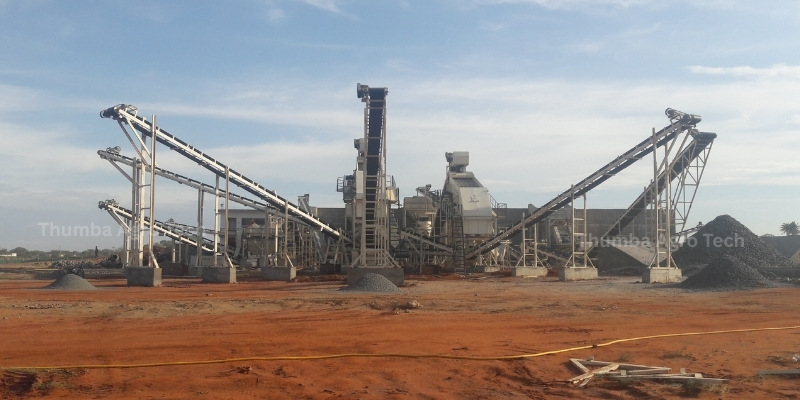
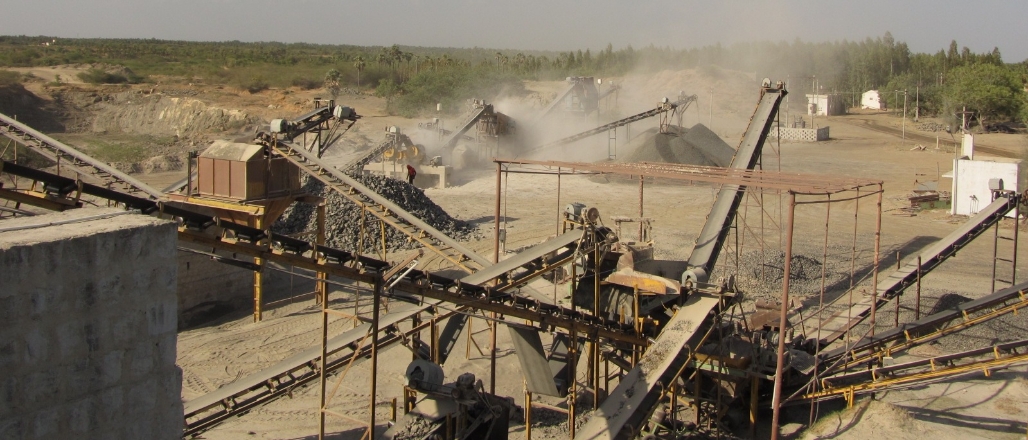
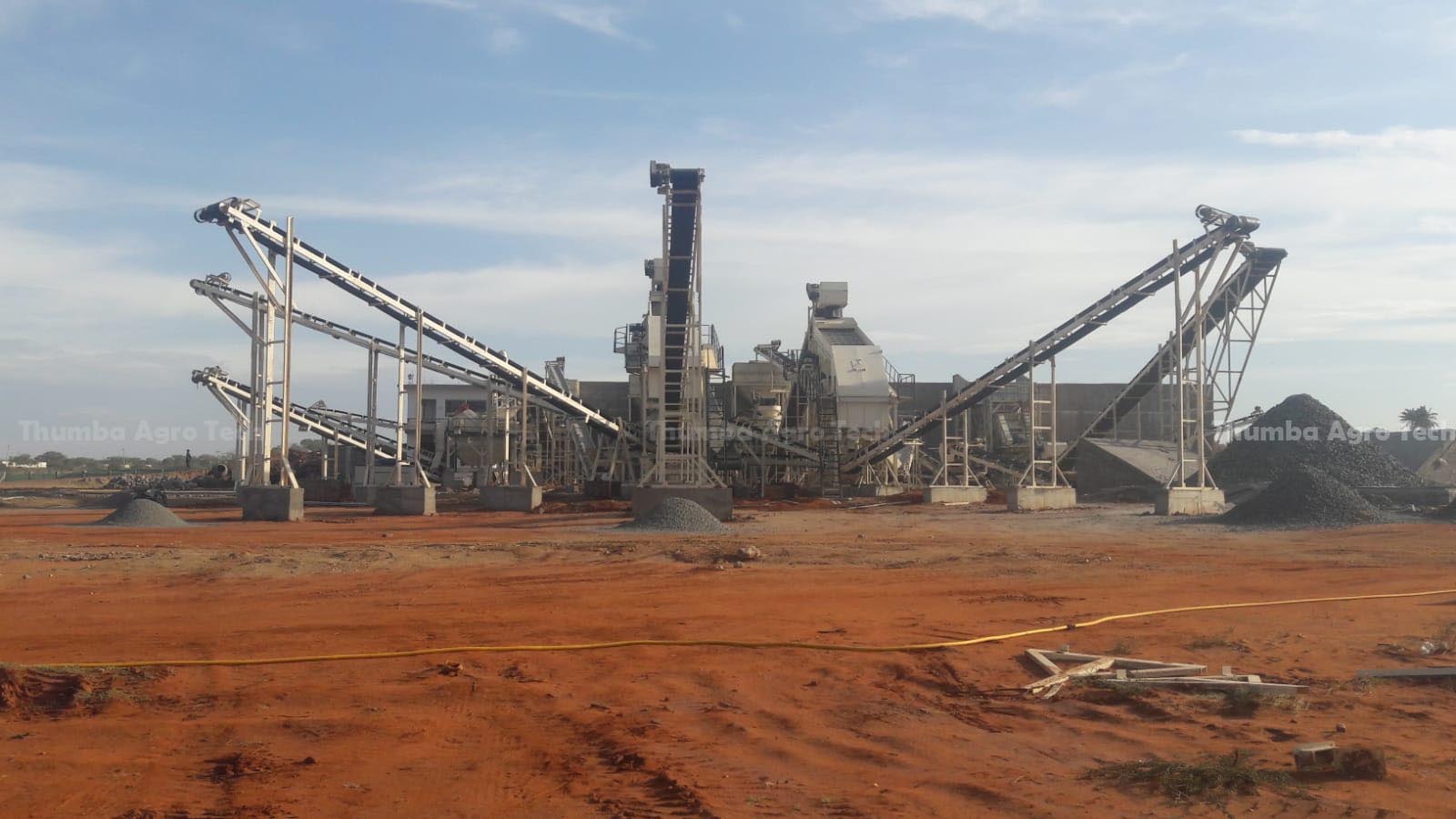
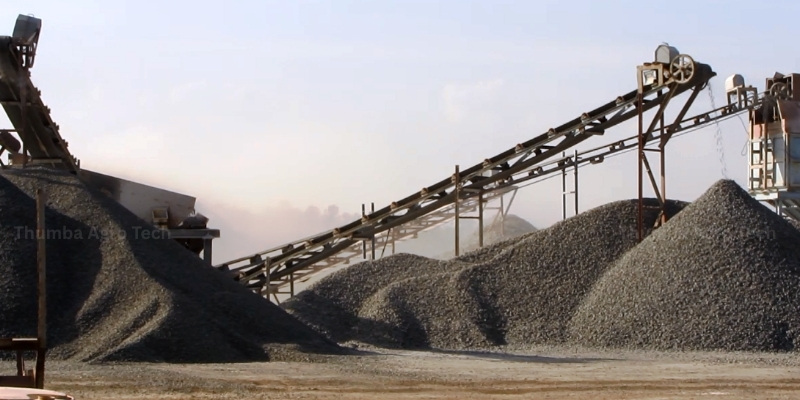
2010 · Silicon Mineral Unit · 2 × 300 TPH · 3,000 km from Palani · Bharatpur, Rajasthan
Two workers, 3,000 kilometres, fifteen days.
In 2010 we finished a huge dust suppression project at Bharatpur, Rajasthan, near Agra. The site is a silicon mineral production unit running two machines of 300 TPH capacity at the same industry — a scale that produces considerably more dust than ordinary stone crushing, and the plant was facing serious pollution issues as a result.
The customer lives in Delhi and called us directly for a complete dust control system erection at his mining industry.
The engineering was the straightforward part. The logistics were not, and they were solved by splitting freight from labour.
We arranged for the complete materials to be sent by lorry transport to Jaipur, Rajasthan — 150 km from the industry — where the customer's team collected them and stored them at his plant. Two of our workers then travelled to the site, 3,000 km from our office at Palani.
All works were finished within 15 days, and the system runs controlling more than 85% of all dust — exactly as promised. Two men, a fortnight, and a plant that had been fighting its own dust cloud.
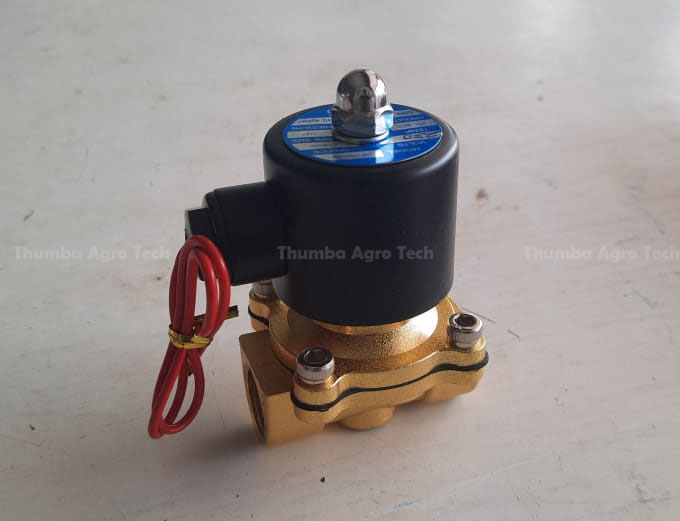
This project is also where we introduced automation into the valve controls, using water solenoid valves.
On a site running two 300 TPH machines, opening and closing zone valves by hand is a continuous job and an easy one to get wrong — suppression drops the moment somebody is busy elsewhere. Solenoid control switches the zones on schedule instead, so coverage stays consistent across the whole shift without anyone standing at a valve.
| Location | Bharatpur, Rajasthan (near Agra) |
| Industry | Silicon mineral production unit |
| Plant | 2 machines, 300 TPH capacity each, at the same industry |
| Problem | Much heavier dust than ordinary crushing; ongoing pollution issues |
| Customer Based | Delhi |
| Material Route | Lorry transport to Jaipur, 150 km from the industry; collected and stored by the customer |
| Erection Team | 2 Thumba workers, travelling 3,000 km from Palani |
| Erection Time | All works completed within 15 days |
| Result | More than 85% of dust controlled, as promised |
| Automation | Valve control by water solenoid valves |
| Year | 2010 |
This remains the largest dust suppression project we have achieved. For the regions where the work is densest rather than furthest, see the Karur region at 40+ projects, or the full dust control overview.
Yes. Our largest dust suppression project was at Bharatpur in Rajasthan, near Agra — 3,000 km from our works at Palani. Two of our workers travelled up for the erection, materials went by lorry to Jaipur for the customer to collect, and the whole installation was completed within 15 days.
By planning the route before the order is confirmed. For Bharatpur we sent the complete materials by lorry transport to Jaipur, Rajasthan — 150 km from the industry — where the customer collected and stored them at his own plant. Our two workers then travelled to site for the erection. Splitting freight and labour like that is often what makes a distant project practical.
Yes. On the Bharatpur project we used automation in the valve controls through water solenoid valves, so zones switch without a person opening and closing valves by hand. On a site running two 300 TPH machines that removes a continuous manual task and keeps suppression consistent across the shift.
More than 85%, which is the figure we promised at Bharatpur and the figure the installed system delivers. Silicon mineral production at that scale generates considerably more dust than ordinary stone crushing, which is exactly why the plant was facing pollution issues before the system went in.
Tell us your plant capacity and your nearest lorry destination. We will plan the material route and the erection together, before you commit to anything.
Get a Free Site Study WhatsApp Us +91 98433 35703Project details on this page are shared from Thumba Agro Technologies' own project records, with permission. The customer's name has been withheld at their preference. To request a correction or removal, contact info@thumbaagrotech.com.